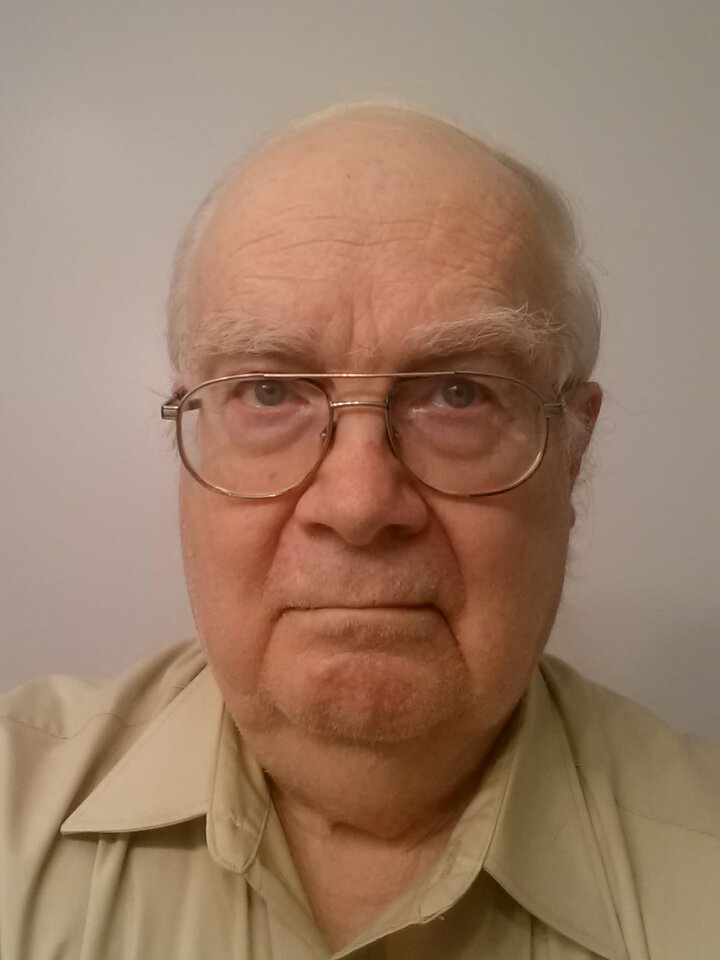
Arthur E. Sowers is a resident of Harbeson.
I have both good news and bad news about David Legates’ recent Opinion, “DNREC’s climate claims vs. state data.”
First, the good news. It is always good to look at reality (the data) and look at the “dogma” (the talk) to see if each has some recognizable relationship with the other. I did not look up any of the data in the sources Legates listed, but he was correct about the general idea that valid generalizations cannot be made based on phenomena that are erratic and events that are few in number. Thus, I would agree that the sentence he quoted, “This is what climate change looks like in Delaware,” is not as well thought out as a way to express an idea. So, I can give a brownie point for that perspective.
Now, the bad news. Legates generated his letter by discussing a tiny bit of the subject matter of a Facebook post and quoting, as far as I could tell, phrases from that post out of context and without a reference link, so I could not easily read and judge for myself the entire message in its whole context. So, my award of a brownie point, above, would have to be tentative until I read the whole context.
Facebook itself, however, is largely and usually a high-rant wasteland, since the quality of its information is often low. If you get your “social buzz” there, fine. I don’t go there. Otherwise, Legates is bringing Facebook trash into the Daily State News’ higher-quality space. Legates should know this.
Moreover, this newspaper recently carried a nice article titled “Months of drought, sporadic temperatures put strain on Delaware farmers.” That article contained links to both a very good Delaware climate report and a prior DSN article on drought in Delaware (I am very sympathetic to farmers who have to deal with this). But I read what both links gave me.
What is Legates’ point? Farther down in his piece, he mentions topics from the Delaware General Assembly and the question of the cost-to-benefit ratio for mandates to reduce emissions. Also, he points out that Delaware’s contribution to emissions is miniscule. In and of itself, that is true. But that sets up a fallacy — sort of — like Zeno’s paradox. All the other 49 states could say the same thing. If that happens, then everybody sits on their hands, and nothing gets done about emissions. And climate change damage will just keep getting worse. A free-access, high-quality internet journal article on this is titled: “Climate change impacts on crop yields: A review of empirical findings, statistical crop models, and machine learning methods.”
My subjective notion is that, compared to some half of the rest of this country, Delaware got off light in terms of climate-related storm damage in recent years. But you can do internet searches to learn which states got hit hard (West Coast, Gulf states, Florida-Georgia area, etc.). Statistically significant crop harvest size reduction by climate change damage is also now known. References are available by internet search. Here is one on the Carbon Brief website: “Mapped: How extreme weather is destroying crops around the world.” When crop yields go down as population numbers go up, your food costs will be going up, too.
Another big, serious problem revealed by internet search is that climate denialism is worst in the U.S. and only one other country, compared to the rest of the world.
I recently did two projects with two artificial intelligences. One was to calculate the combustion of the sum of all mined coal and all produced oil, in database inventories, as added to global carbon dioxide and to see if it matches the increase in CO2 parts per million today from that in 1800 A.D., and it was very close. The second project was to put all measured and measurable factors together to calculate whether extra CO2 ppm explains solar energy-based average absorption to global temperature increase, and the calculations on that came out close, too. The AIs even gave me lists of references to high-powered journal publications. So, if you follow the idea that climate change is a hoax, then you just have a closed mind.
Reader reactions, pro or con, are welcomed at civiltalk@iniusa.org.