

 By Andrew West
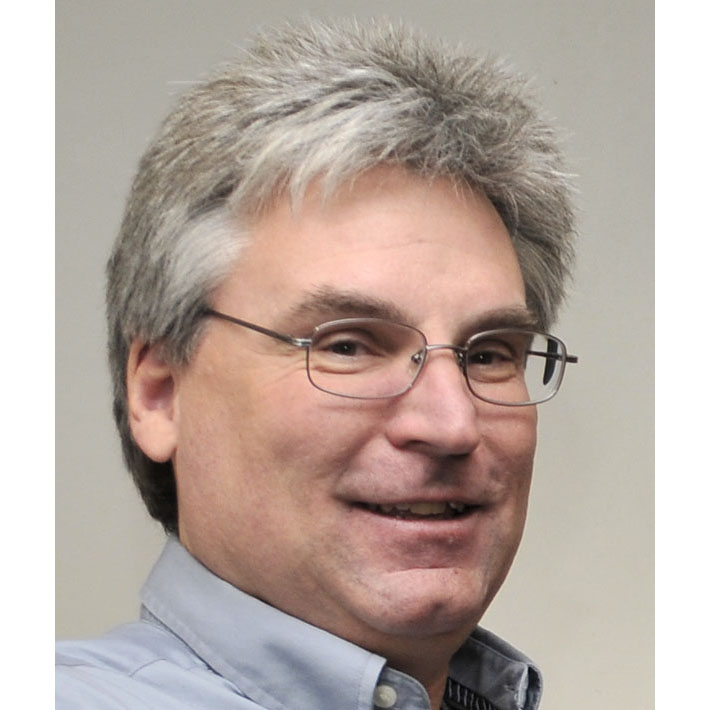
MILFORD — Thanks to Tom Summers and Dr. Reba Ross Hollingsworth, we have a better understanding of what Milford was like in the mid-20th century.
In the first installment of “The Other Side of the Tracks,” now showing at BaytoBayNews.com, Dr. Hollingsworth shared what it was like for her family and the Black community.
She offered memories of school, church, shopping, farming and more.
“What I’m doing is trying to get that history down, so it’s not lost,” said Mr. Summers. “In 10 years, you would be talking to children and grandchildren of these people, instead of the individuals themselves. There would be something lost if you waited any longer.”
***
Mr. Summers got the idea for the video interviews, blended with photos in the style of Ken Burns, a few years ago after taking a walking tour in his hometown of Milford.
The tour came up at a Delaware Heritage Commission meeting. Dr. Hollingsworth, a retired educator, is the vice chair.
She asked, “Did they do anything with the African American community?”
Mr. Summers replied it was mostly related to the business section of the city.
“When she told me she had grown up in Milford, I started to think about it,” he said. “This is part of Milford’s history that I had never seen or heard.”
A short time later, Mr. Summers took Dr. Hollingsworth to some familiar places in the city, like Benjamin Banneker Elementary, near where she went to a segregated school. She started first grade in 1932.
They strolled along a Walnut Street sidewalk and then down memory lane in a sit-down interview at the Milford Museum.
One of the first topics was the travel from Milford to Lincoln, where Dr. Hollingsworth’s grandfather had a farm.
The mode of transportation: “Chevrolet,” she said with a smile.
“You shove one foot and lay the other,” she joked.
Her family’s produce was sold to grocery stores on Walnut Street. She and a sister would sometimes sell berries for 10 cents a quart door-to-door in the city.
She recalled one woman who asked that they go to the back door. They walked on.
Dr. Hollingsworth’s family shopped at and did business with the same stores as White residents, she said. But there was a time when they chose not to support one store, Cleaver’s.
It was 1954, when school integration tensions were building.
“When Bryant Bowles came to town,” she said, “Cleaver let Bryant Bowles and the National Association for the Advancement of White People use his truck to go through the streets with a bullhorn, talking about not integrating the schools.
“When my parents found out, they went down and closed out the account and never went back again.”
Dr. Hollingsworth said she attended Milford School No. 3, which later became known as Benjamin Banneker School in the 1940s.
Growing up, the students never had new textbooks.
“All the books we had came from the White schools,” she said. “My sister and I, when we were younger, would help the teachers clean up these old books each summer. We would erase them and tape them back up.
“I never had a new book until I went to Delaware State and bought my own.”
Education was central to her life story. She attended Booker T. Washington Middle School in Dover before enrolling at Delaware State College High School and Delaware State College.
She earned a bachelor of science in home economics.
In 1970, she was awarded a master’s degree in guidance and counseling from the University of Delaware and then, in 2001, a Ph.D. in counseling from Pacific Western University.
***
You will undoubtedly find interesting Dr. Hollingsworth’s remarks about Rosedale Beach, the Moonlight Grill and the Milford Yanks baseball team.
This film is the first in an occasional series that Mr. Summers will be producing in collaboration with BayToBayNews.com.
Bryan Snyder filmed the interview, and Carlos Maldonado helped with the video editing and production of Dr. Hollingsworth’s story, which was completed in late 2019.
Caesar Rodney High School students will be assisting with the filming and production of upcoming stories.
“I was really happy with the content we had, and I thought Dr. Hollingsworth did a great job,” said Mr. Summers. “I thought it was very good at relaying what the life was like in the 1930s, through the ’40s and ’50s in the Milford area and around the region.”
Now 95, Dr. Hollingsworth’s memories are priceless.
“She’s really on top of things,” said Mr. Summers. “She’ll give you her opinion and won’t hold back.”
Mr. Summers, who grew up on Clark Avenue in Milford, said he is a 12th-generation Delawarean.
He spent the majority of his career in state government working at the Delaware Public Archives, deepening his appreciation of the state and its history with every tour he gave.
“It gave me an idea of how important and special Delaware really is,” he said.


