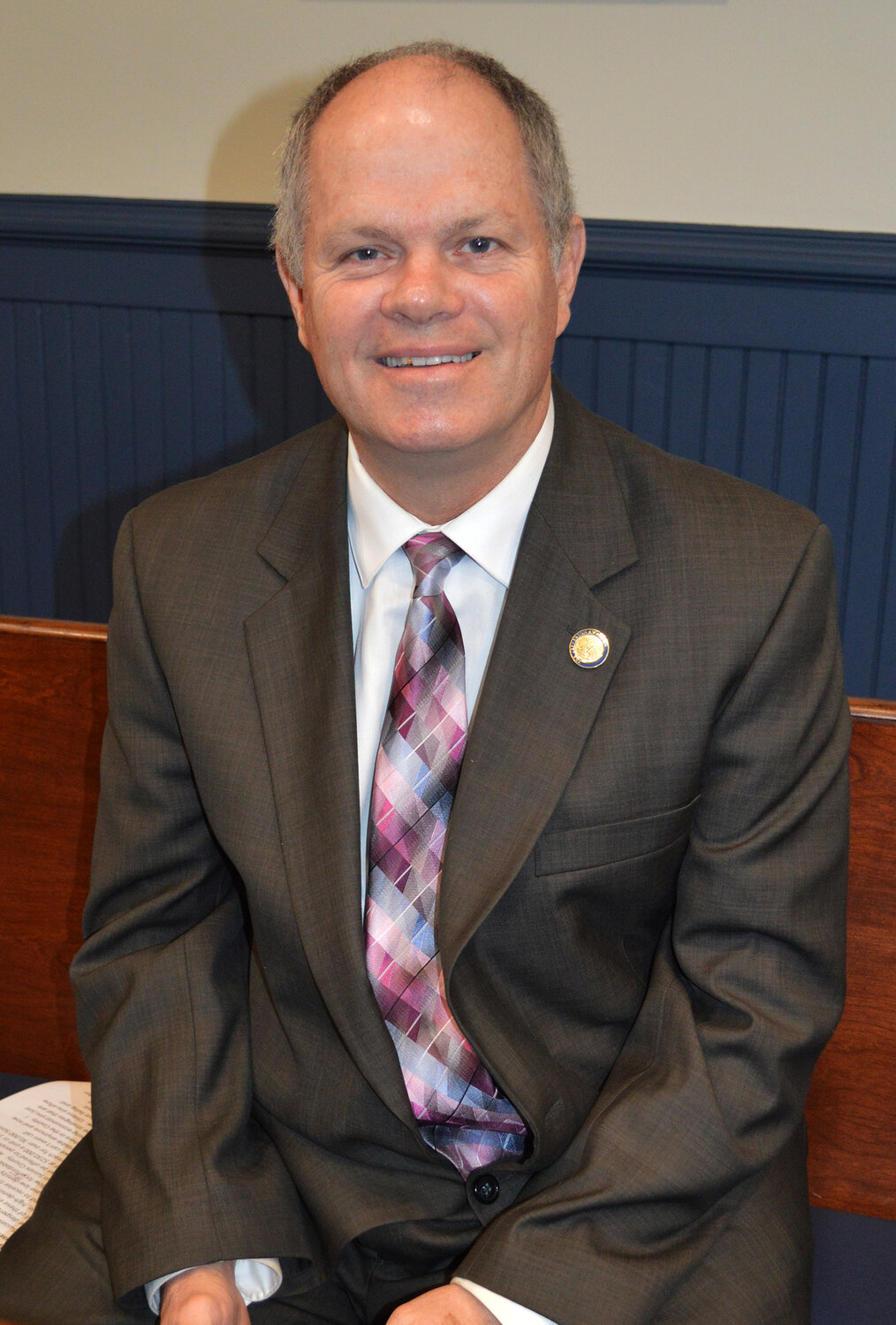
Jim Martin is the director of The Shepherd’s Office in Georgetown.
This Opinion of mine is about a woman in her mid-30s, who is the walking ghost of Georgetown. I am on the front lines of our poverty crisis every day, and I often see a woman in her 30s pacing the sidewalks, while also talking to herself constantly. She is also a regular guest during our free meal every day at 4 p.m. So, our team and I have been trying our best to help and hope to find her a better life. She is obviously disabled with severe mental illness, but she has zero income now and sleeps in the woods. And this can’t be the solution to her poverty situation. We have to aim higher than just survival for her. Let’s work together to replace her basic survival with a life. She graduated from Milford High School. She had employment. She became a mom, who brought three children into the world. She cared for them in the early years. And, now, fast-forward to 2026, and she walks the streets of Georgetown as a totally collapsed human being. And, for homeless advocates like me, it is devastating to see her life on the streets of Georgetown playing out in plain sight every day. As a helper out here, my eyes are trained to see what our modern society actively chooses to criticize and ignore, but there are some realities so brutal that they shatter our souls as helpers. Day after day, I watch this woman in her mid-30s pace these Georgetown sidewalks. Again, she is a mother who brought three children into this world. But, today, she is like a ghost inhabiting her own body. Because of our current system of psychiatric care, we are seeing how much this care is failing. We are constantly seeing untreated madness and human cruelty collide every day. And her story is a road map of absolute destruction, paved by the various men who broke her. Her own ruin came when her “baby daddy” committed murder in Dover, dragging this mom into his wreckage by forcing her to straw purchase the weapons. She took the full hit for that crime, a legal and societal crush from which she never recovered. She served time, and coming out of prison, she was stripped of a home, stability and safety. She now exists in a state of perpetual, public unraveling. She talks to herself constantly, her mind fractured into a constant internal dialogue, just to cope with the reality of her external world. If you stop to truly listen to her, she speaks openly and constantly, while she walks in a reality that should paralyze any decent community with shame. She complains of being raped so frequently that sexual violence has ceased to be an emergency for her. Men raping her has simply become a line item in her daily routine. She is locked in a vicious cycle of addiction and extreme mental illness. We are completely powerless to do anything to help her other than provide food, clothing and hygiene items. I am sad because I see a mom who died on the inside a long time ago, but her heart is still beating. She is physically walking our streets, yet everything that makes a life livable has been extinguished. How have we, as a society, reached a point of such profound cruelty that we allow this horrific routine to continue day after day in Georgetown?
This crisis exposes the deep, rotting failure of our modern approach to severe mental illness. Decades ago, the closing of asylum-style institutions was championed as a victory for civil rights. Yet the community-based care, supportive housing and intensive rehabilitation promised to replace them never fully materialized. In our rush to protect individual autonomy, we have created a system that leaves the most broken among us entirely defenseless. We have traded the walls of an institution for the freezing concrete of the sidewalk, confusing abandonment for liberty.
When a human being is so profoundly damaged by trauma and psychosis that they cannot protect their own body from constant violation, leaving them to the elements is not a respect of their rights; it is a collective moral failure, and we should all be ashamed to our core. We must revive the conversation around safe, permanent and protective mental health sanctuaries. We need spaces where individuals whose lives have been utterly destroyed on the outside can live with basic safety, supervision and peace. We cannot continue to look past our mentally ill neighbors and call it freedom. We have to do better. If we cannot protect a vulnerable mother from being destroyed on the streets of our own town, called Georgetown, then we have lost the right to call ourselves a civilized community.
Reader reactions, pro or con, are welcomed at civiltalk@iniusa.org.