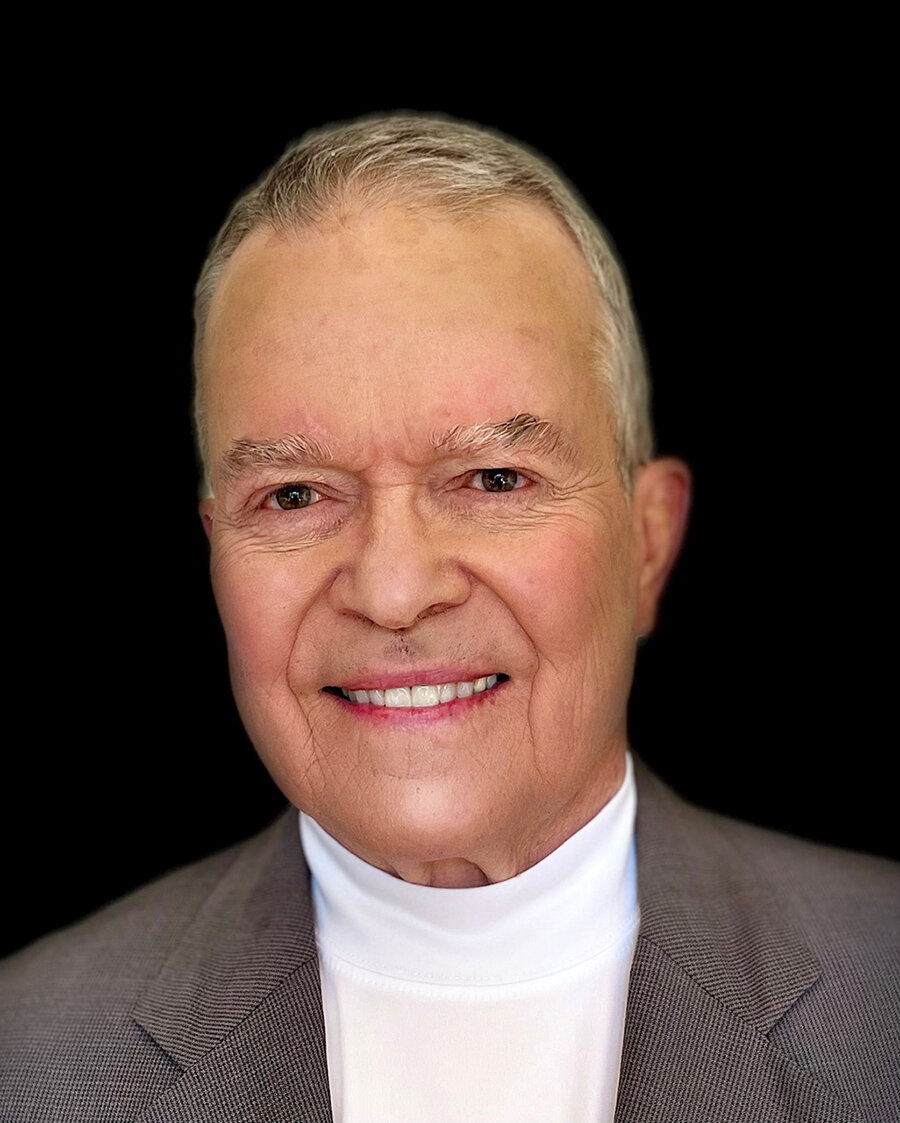
Tom Patterson is a retired physician and former Arizona state senator who lives in Paradise Valley, Arizona.
What accounts for the differences in academic achievement between inner-city poverty-area schools and high-income public schools? We’ve all heard of the dreadful schools in cities like Chicago and Baltimore, with no children in the entire building able to achieve even baseline levels of competence in math or verbal skills, and many other schools with a third, at most, achieving grade-level skills.
Many would assume that funding is the major determinant, but the facts don’t back that up. American public schools have traditionally been funded by local property taxes, which provide a clear advantage to the wealthy. But that was then. Today, education funding is complex, with federal monies for special programs, equalization formulas and other inputs making it difficult for even experts to determine the bottom line.
A recent study from the Urban Institute confirmed other research showing that “when considering federal, state and local funding” all states but three “allocate more per student funding to poor kids than to non-poor kids.” Moreover, researchers from Harvard University and Stanford University found that each extra $1,000-per-pupil spending is associated with an annual gain in achievement of one-tenth of 1% of a standard deviation. In other words, more spending and more learning are essentially unrelated.
If more spending did produce more achievement, we would be morally obligated to provide it. As it is, we must look for other reasons to explain the achievement gap, examining how well the allocated funds are used. Education researcher Jay Greene observes that “wasteful schools tend to hire more noninstructional staff, while raising the pay and benefits for all staff, regardless of their contribution to student outcomes.”
Effective schools, whenever possible, prioritize the learning interests of students, eschewing the fads and misconceptions that plague the public school establishment. When a Stanford education professor helpfully developed an “equity-based” curriculum proposal, gullible California educators issued guidance against students taking algebra courses before high school.
After decades of the promotion of “context-based” reading instruction, it became obvious that the old-fashioned phonics instruction produced better readers. The Columbia University center that pushed context-based instruction was finally closed in 2023.
The devastating pandemic closures demanded by the teacher unions disproportionately affected low-income public school students. The closures lasted longer and caused more learning loss for poor students than for those in private schools and more upscale districts.
The different, more “lenient” treatment afforded to low-income kids is evident also in the cellphone bans proliferating in the schools. Educators are suddenly realizing, after 20 years or so, that daily staring at a small screen bearing social media messages is not healthy for the developing brain.
According to advisories from the surgeon general, UNESCO and others, adolescent cellphone usage impairs academic achievement by distracting students’ attention from classroom instruction. Chronic cellphone overuse is also isolating and interferes with normal social development. Widespread cellphone use is associated with higher rates of teen depression and suicide.
Eight states and many school districts have imposed cellphone bans, and others, including Arizona, are considering legislation. But there are objections. Parents feel the need to “keep in touch” with their children. Phones are also needed to locate friends in the lunchroom (yes, really). More seriously, parents worry about not having contact in a school shooting, even though the chances of any student encountering even one during their entire school life is vanishingly small.
The bigger problem is that legislative cellphone bans are typically so loose and riddled with exceptions that they are practically useless. California, with great fanfare from Gov. Gavin Newsom, passed a bill that only required schools to “adopt a policy limiting or prohibiting smart phones by July 2026.” Any school with even an insignificant modification in cellphone usage would be legally in compliance, and enforcement would be a snap. Helicopter parents would still be in business. Florida’s ban is limited to classroom time only.
Private schools and high-end public schools pushed ahead with their own rules, which typically are more comprehensive and tightly written. Strict, uniform restrictions are easier for both teachers and students to understand. Meanwhile, poor students once again are saddled with misdirected compassion and low expectations.
Reader reactions, pro or con, are welcomed at civiltalk@iniusa.org.