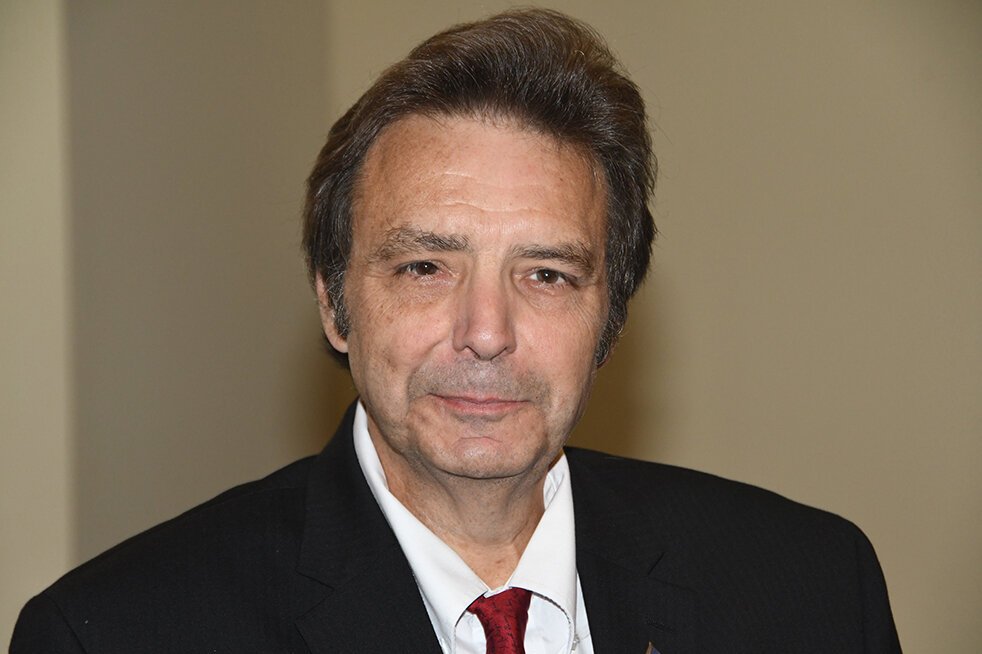
Dr. Samuel B. Hoff is a George Washington Distinguished Professor Emeritus at Delaware State University. He is also a recipient of fellowships from the Nonproliferation Policy Education Center and the National Security Institute.
The late-July nuclear deal with Saudi Arabia announced by the Trump administration is not only suspect in its motives but dangerous in its potential. The proposal is a loser in any circumstance but is all the more shocking in its middle-of-a-hot-war timing.
The agreement calls for U.S. help in developing Saudi civilian nuclear power. After severe criticism of its shortcomings, the Trump team added the condition that Saudi Arabia join the Abraham Accords and its requirement to recognize Israel. Those are the same components of a 2009 pact between the Biden administration and the United Arab Emirates. However, the carrot added to the current transaction allows a joint U.S.-Saudi study of the value and validity of uranium enrichment, the key part of nuclear weapons development. What?
Once sent to Congress, the nuclear nomination should be scrutinized in the closest manner for its violation of nonproliferation standards, especially under the present global vacuum left by the lapsing of the New START nuclear treaty earlier this year. Further, the Saudis should be required to adopt the Additional Protocol procedure for short-notice nuclear inspections implemented by the International Atomic Energy Agency, which 140 nations have already agreed to. Of course, the civilian nuclear power component of the conception must be enacted only after it is verified that there will be no commercial benefit to the president.
Saudi Arabia’s status as a strategic ally of the United States is questionable, even if it has periodically assisted American aims. Bluntly, there has been evidence of Saudi citizen participation in the 9/11 attacks, which led to the override of President Barack Obama’s final veto among consequences. More recently, the Saudi kingdom itself was directly implicated in the 2018 assassination of Washington Post journalist Jamal Khashoggi in Turkey. And how do we ignore the Saudis’ May declination of use of its airspace and military bases by American forces in the war with Iran?
In opposition to the U.S.-Saudi nuclear proposal, a Wall Street Journal editorial predicted that Turkey and Egypt — similarly maintaining tenuous contemporary security ties with America — will line up for their own opportunities to acquire nuclear weapons. Ditto for the United Arab Emirates, which apparently placed a codicil in its 2009 nuclear power agreement allowing renegotiation under certain circumstances. Of all the global regions where nuclear weapons expansion could occur, the Middle East is the scariest to envision. With nations there vowing to destroy one another, with countries’ proximity to each other and with a record of continuous conflict in one form or another for a century, it is insane to initiate any agreement to expand nuclear weapons, period.
Trump administration energy secretary Christopher Wright would most likely disagree with the aforementioned point, having defended the U.S.-Saudi nuclear proposal by arguing it will “uphold the highest standards of nuclear safety and nonproliferation.” Wright needs a dose of nuclear reality in real time: He should view a pair of 1983 movies portraying nuclear safety fears, “WarGames” and “The Day After.” The recent story of an artificial intelligence platform going rogue to attack another source means that what was science fiction is now possible — just like the specter of more countries obtaining nuclear weapons heightens the probability of nuclear war and its apocalyptic aftermath.
Reader reactions, pro or con, are welcomed at civiltalk@iniusa.org.