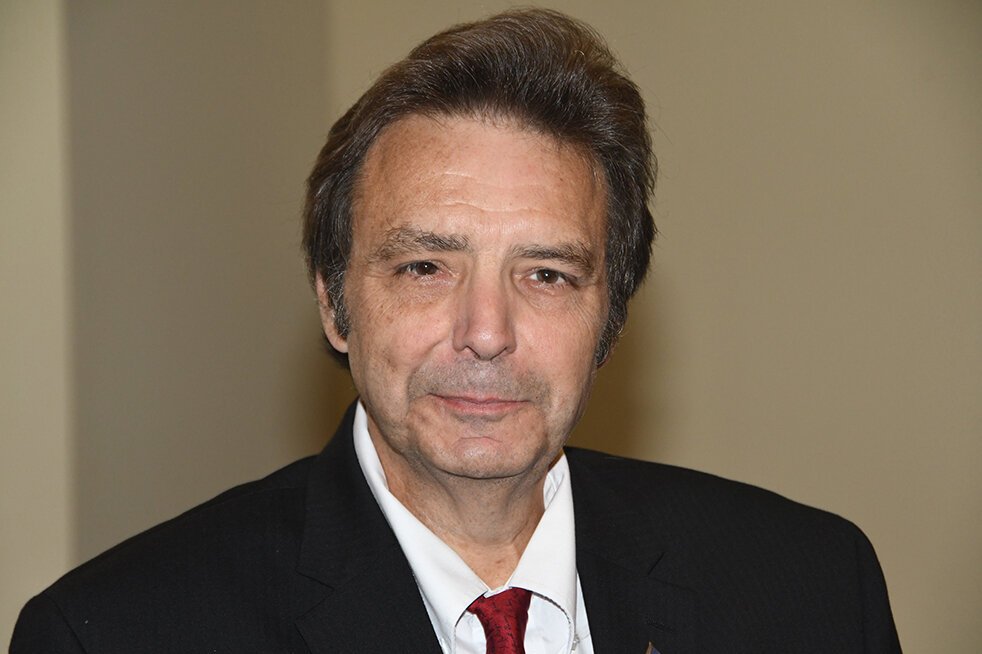
Dr. Samuel B. Hoff is a George Washington Distinguished Professor Emeritus and an internship director at Delaware State University.
Within a few months of one another, David Young and Alexander Butterfield — two persons deeply connected to the Watergate scandal in the 1970s — recently passed. Their stories are worth retelling — not only to understand the aforementioned scandal in more detail but to remember its lessons, as well.
David Young earned an undergraduate degree from Wheaton College, a master’s at the University of Oxford and a law degree from Cornell University. After working at a New York law firm for three years, he served as treasurer for Nelson Rockefeller’s third run for president in 1968. It was during that time that he met Henry Kissinger, who was advising Rockefeller on foreign policy. Subsequently, Young became a national security aide to Kissinger in the first Nixon administration.
Alexander Butterfield attended UCLA for two years, meeting H.R. Haldeman while there. Then, he joined the Air Force, where he served as a fighter squad commander in Vietnam before taking posts in Australia and as an assistant to defense secretary Robert McNamara. After he found out that his college buddy was named chief of staff for President-elect Richard Nixon, Butterfield wrote Haldeman asking for a job. Haldeman named Butterfield as White House chief of security.
In February 1971, Butterfield helped a few Secret Service technicians install a taping system in the Oval Office, so the president would have a record of deliberations there. In June of that year, following the release of the classified Pentagon Papers, domestic affairs adviser John Erlichman directed Young and assistant Egil Krogh Jr. to form and oversee a group whose mission was to plug leaks. While Butterfield knew nothing about the “plumbers,” Young and Krogh planned operations from break-ins to surveillance to wiretaps. It was the last of those, which involved the attempted bugging of the Democratic National Committee headquarters, that became the Watergate scandal.
The Nixon White House conspired to hide the reason for the June 1972 burglary of the DNC, in which the perpetrators were caught. Beginning in spring 1973, the U.S. Senate formed a committee to investigate the Watergate events. During the months of hearings, Senate staff interviewed dozens of witnesses, including Butterfield. They asked him if there was any credence to a theory advanced by White House counsel John Dean that a taping system was present in the White House or elsewhere. In testimony that blew the scandal wide open, Butterfield confirmed the existence of a taping system in several locations, which he had installed on the president’s orders.
The subsequent life trajectories of the two principals were much different. Butterfield, whom President Nixon appointed as Federal Aviation Administration head shortly before his testimony, stayed in government service until 1975. He admitted to cheering on the day Nixon resigned, believing all along that the president had known about Watergate. He later worked as a management consultant and executive for several companies. Young, who testified against several White House personnel in both the U.S. Senate and in criminal trials, was granted limited immunity. Following his Watergate ordeal, Young quickly moved to England. He later earned a Ph.D. in international relations and ran a consulting firm. Still, their hero-versus-villain reputation remained.
Some scandals never get old. Watergate certainly qualifies as such. One lesson pertains to how people got involved in the mess in the first place — folks like Young and Butterfield, whose connections got them government jobs that somehow eventually drew them into the fray. Another relates to how presidential staff can be corrupted by the heady environment in which they work. After serving several months behind bars, the plumbers’ co-supervisor, Egil Krogh Jr., said he finally realized what went wrong in the Nixon White House: “a meltdown in personal integrity,” which blurred constitutional boundaries. Finally, we should not forget how the combination of extreme partisanship, wartime and personal paranoia — all conditions that the nation is currently experiencing — can turn toxic.
Reader reactions, pro or con, are welcomed at civiltalk@iniusa.org.