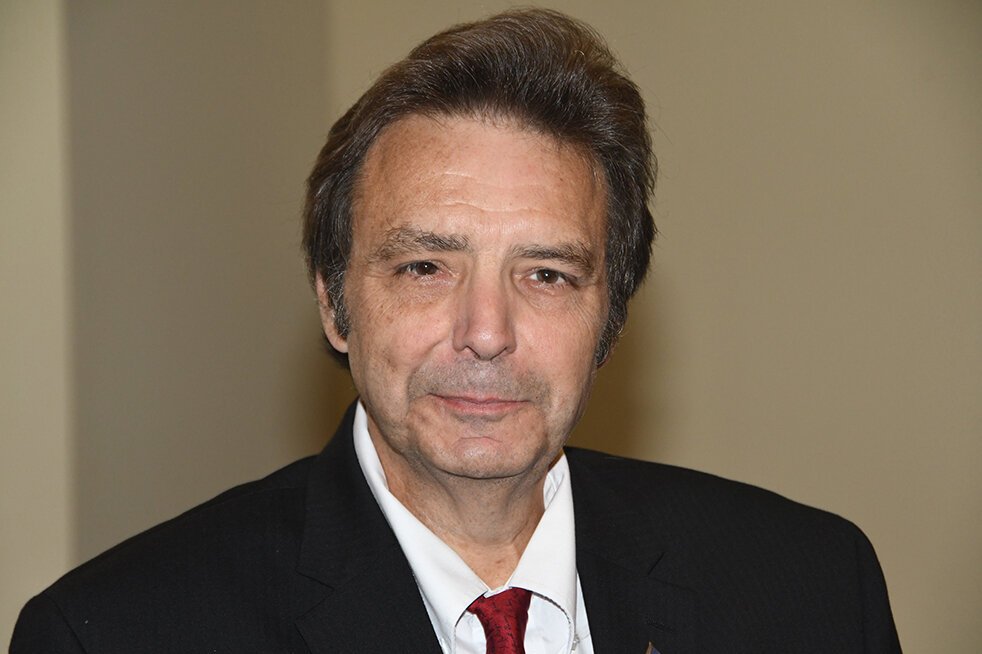
Dr. Samuel B. Hoff is a George Washington Distinguished Professor Emeritus and an internship director at Delaware State University. He also served as chair of the Dover Human Relations Commission for five years.
World AIDS Day has one less nation raising awareness of the pandemic: the United States. Despite U.S. presidents recognizing the day since 1988 and issuing a proclamation for the occasion since the Bill Clinton years, President Donald Trump has ordered the State Department not to use government funds or to publicly promote the occasion.
The Trump White House’s assault on global health policy began on the initial day of DT’s second term, when an executive order was signed that withdrew America from the World Health Organization. That has been followed by the gutting of foreign aid in the area, slashed by two-thirds. There are many possible reasons for President Trump’s conversion from his first-term support of the fight against the AIDS scourge.
One reason for the new policy could be plain ignorance of the AIDS pandemic and its consequences. Since being cited as a new disease meriting attention by the then-Centers for Disease Control in 1981, AIDS has ravaged the gay community, people who inject drugs and sex workers, among others, but likewise children who became infected. In all, more than 90 million have been infected with HIV, and 44 million have perished globally.
Could it be that the Trump White House is simply copying other nations? There is evidence to support that claim, as European nations are also radically reducing donations for AIDS treatment, part of an apparent global trend, albeit counterintuitive, especially after the shared COVID-19 experience.
Perhaps another logical rationale for the revision in AIDS support has to do with the Trump team’s “America First” orientation to U.S. foreign policy. In fact, just last month, the White House announced that, instead of dealing with intermediaries, it intends to discuss health issues directly with foreign governments. There is no evidence that has been done, let alone planned.
Of course, the Trump II team can always cry budget poverty as a justification for cuts, and it isn’t kidding on that score, having added trillions to the federal debt at a pace that dwarfs any of President Trump’s first-term spending. However, while one can certainly call out the current administration for wasteful forays, the disturbing message here is that the White House is not seeing the already devastating impact of AIDS deaths and infections worldwide.
Finally, one hopes that the Trump White House’s updated official policy toward World AIDS Day is not an intentional effort to further marginalize groups who tend to contract the disease disproportionally, including Black individuals and young persons. It becomes easy to look away from those who may be of less means, of different heritage and who live far away.
Every year since 1988, a certain theme has been attached to World AIDS Day. Unfortunately, the Trump administration’s cruel and counterproductive change in global health policy has already furnished the appropriate symbol for this year’s nonacknowledgment: the skull and crossbones.
Without question, Donald Trump’s behavior toward the COVID-19 pandemic in 2020 cost him a second consecutive term as chief executive. While he won’t be on the ballot again, the nation and world will suffer needlessly as a result of his turning away from his commitment toward assisting others.
Reader reactions, pro or con, are welcomed at civiltalk@iniusa.org.