

HARRINGTON — Future data centers potentially could use all the available electricity in the state, so Delaware Electric Cooperative (DEC) officials are making preparations to ensure their other …

Join our family of readers for as little as $14.99 per month and support local, unbiased journalism.
Already a member? Log in to continue. Otherwise, follow the link below to join.
Please log in to continue |
HARRINGTON — Future data centers potentially could use all the available electricity in the state, so Delaware Electric Cooperative officials are making preparations to ensure their other customers will not be negatively affected.
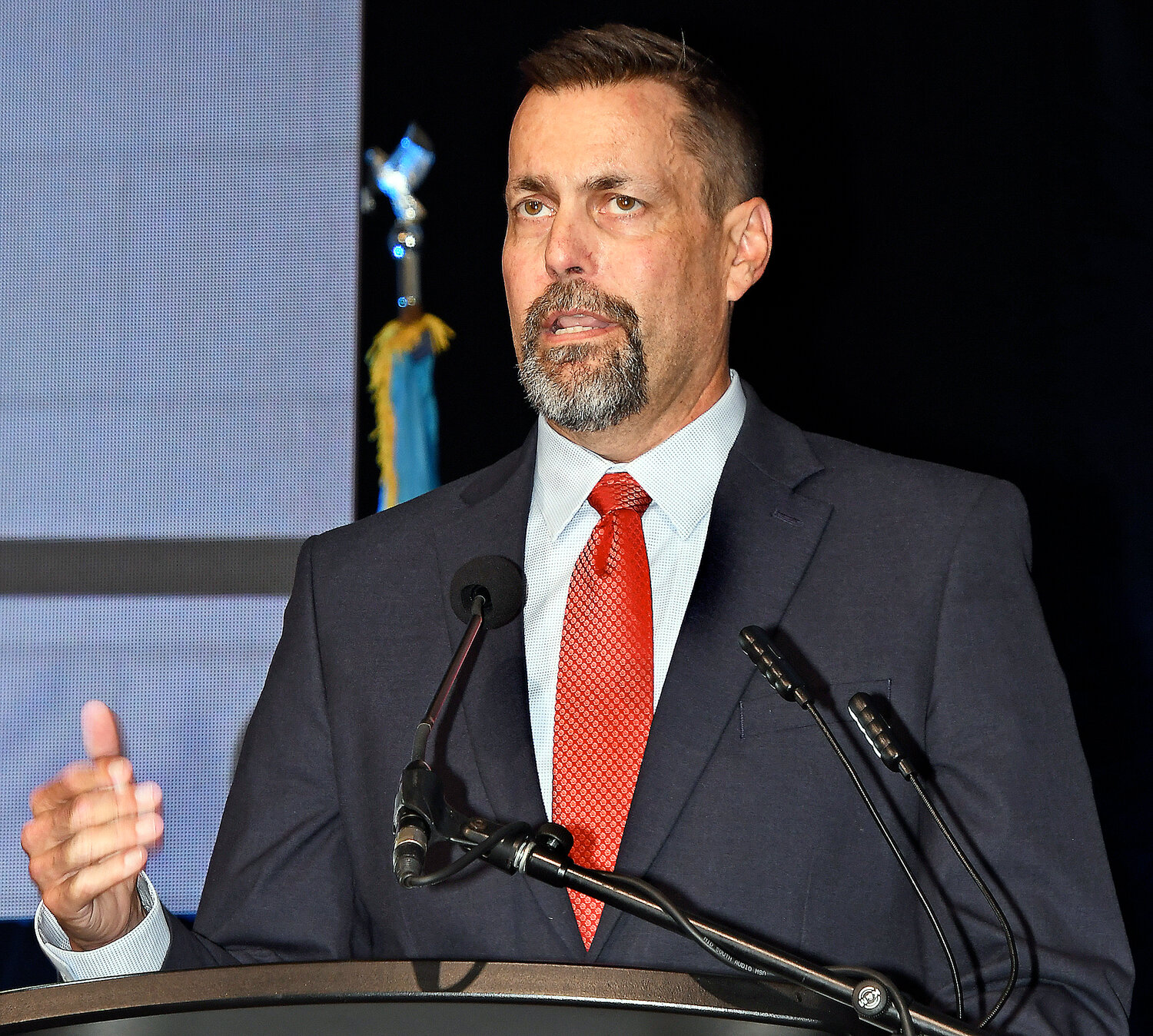
“When we’re talking about capacity to power data centers, we’re talking about in general the capacity to power everything,” said DEC president and CEO Rob Book at the cooperative’s Aug. 12 annual meeting at the state fairgrounds in Harrington.
“We are in a capacity crisis right now, especially as (data centers) come on,” Mr. Book said. “We need any kind of capacity, but it’s got to be reliable and affordable for our members.”
Electrical utilities must “get real” about building capacity in the region, regardless of whether data centers need to be accommodated, he said.
Renewable energy sources can help ease the capacity crunch, but are intermittent and must be paired with storage, he said. When the sun isn’t shining and the wind isn’t blowing, those energy sources aren’t available, he added.
“We can’t just built renewables and expect us to get out of this situation,” Mr. Book said. “One of the grid partners that governs (regional energy-transmission organization) PJM has told us that for every 100 megawatts of traditional power that’s retired, it takes 700 megawatts of renewable power to recover all of that energy that’s been lost.”
The Milford City Council recently authorized battery-storage firm Lightshift Energy to construct such a facility to collect and distribute energy from the city’s solar power site.
But battery storage is quite expensive and currently cannot be done without plenty of government grants and funding help to “get those projects over the line,” Mr. Book said. The cost of solar energy also is rising because of tariffs placed on related equipment, he added.
“The problem with solar is, we can build so much solar in an area, but if there’s nowhere for that additional (energy) to go, it flows back onto the transmission (grid),” Mr. Book said. “We get penalized and it can be a dangerous situation.”
DEC is considering battery-storage facilities for its solar operations and plans to break ground for one such project in Georgetown next year, Mr. Book said. The cooperative applied for, and will receive, several million dollars’ worth of state grants for that initiative, he said.
The project will aid grid resiliency by allowing power from the battery-storage facility to be dispatched to areas with outages and to the system during peak usage periods, DEC officials said. The initiative also may allow more Georgetown residents to install solar energy systems, they said.
DEC will have no role in Maryland offshore wind energy project that’s slated to be built off the coast of Ocean City. That project faces multiple roadblocks, Mr. Book said.
Northern Virginia has the most data centers in the world, but others are starting to pop up around the country.
Delaware currently does not have any data centers, but one is being considered in New Castle County. That facility would not be on DEC’s grid, Mr. Book said. Gov. Matt Meyer also has expressed interest in making the state a locus for artificial intelligence, which would entail data centers.
Data centers require large transmission grids and DEC would require the owners of such facilities to cover the cost of building those substations, Mr. Book said. Because of the massive amounts of energy used, DEC likely would bill data centers weekly, he said.
“There are other areas of the country where they’re escrowing 10 years’ (worth) of bills,” Mr. Book said, adding that for a Google data center, that amount likely would be between $50 million and $100 million.”
Mr. Book was hopeful new technologies would make data centers more energy efficient.


 By
By