





 By Andrew West
DOVER — Let’s kick this column off with a question: If you had to increase taxes, what would you suggest?
There is much wrangling to be done in Legislative Hall about rising demands for state revenue to keep up with a growing budget.
Additionally, there are big questions about how Delaware can grow its economy.
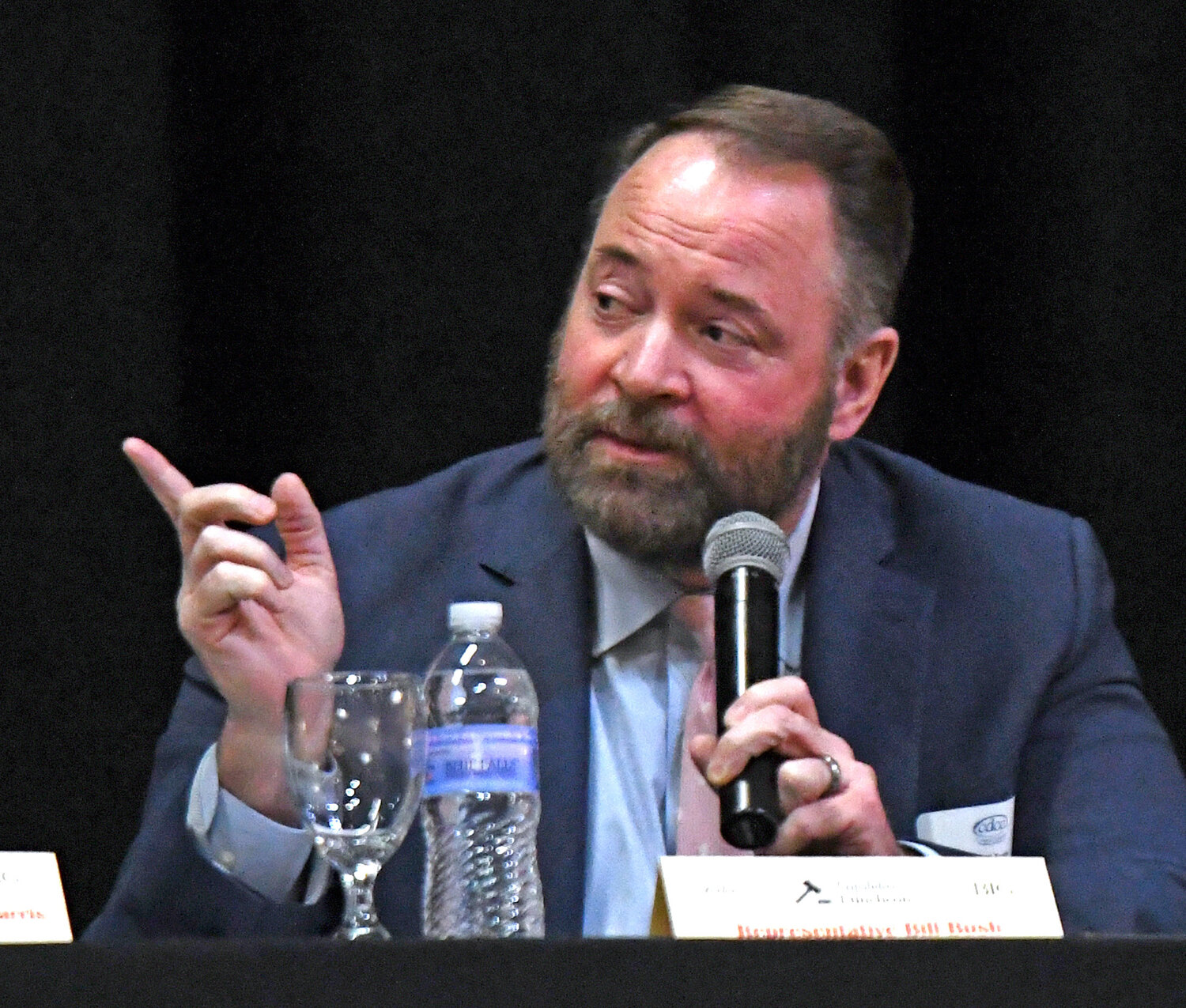
At a March 12 Legislative Luncheon, an annual event of the Central Delaware Chamber of Commerce, nine Kent County lawmakers weighed in after being asked about raising personal income taxes on the state’s highest-income earners.
The chamber’s prewritten question read, “We are concerned that this practice may result in driving them out of Delaware, thus shrinking the tax base and hurting small businesses. We believe that penalizing those with higher incomes could have a detrimental impact on the state’s appeal to be a business-friendly environment.”
The state Division of Revenue indicates that the top income rate — for $60,000 and above — has been 6.65% since 2014. Prior, it was 6.75%.
Sen. Dave Lawson, R-Marydel, started his answer with the current spending number for Delaware: $7 billion.
Of that, $2.78 billion is for the Department of Education and $2.5 billion is for the Department of Health and Social Services, he noted.
“I believe it’s time to have that hard discussion, about spreading the burden of paying for state services across the board … in a sales tax,” Sen. Lawson continued. “I know — oh, we can’t do that. It’s fine, folks. We can’t do this anymore.
“Why are the working guy and gal getting hit, and the nonworking or renters aren’t?” he said. “Let’s spread it out. We can reduce the income tax. We could reduce the property taxes.”
Sen. Eric Buckson, R-Camden, had pointed out earlier that state education spending is barreling toward $3 billion a year and is a third of overall spending. He said it should be considered that some taxpayers contribute school dollars — in personal income taxes primarily and property taxes.
“I’ve argued that what we should be better doing is looking at where we’re inefficient in our spending and repurposing,” he said.
But Rep. Lyndon Yearick, R-Magnolia, said he was opposed, noting that wealthier people have greater mobility and would be more apt to just leave the state.
Look around the nation, he added. Nine states are considering reductions in personal income taxes, and nine do not have any.
During his turn, Sen. Trey Paradee, D-Dover, added some additional perspective. “There is zero chance you’ll see a personal income tax bill this year,” he said, sharing that New Castle Countians are still reeling from the higher property tax burdens that came with reassessments.
The senator stated that it has been the same, with some small tweaks, for 40 years.
“That was a progressive tax rate 40 years ago,” he continued. “It’s not today, but I will say that this year is not the time to change it.”
And, he offered something else for the business crowd to consider.
For many years, Delaware was in the top two or three tax burdens in the country. “We’ve dropped to 10th to 15th,” he said. “That’s bad. It makes it difficult to attract new businesses here.
“One of the big selling points for Delaware has always been, if you come here, your higher earners are going to have a great life. Their taxes are going to be some of the lowest in the country. We’ve got great beaches. We’ve got these things. … Well, guess what. We can’t say we have some of the lowest in the country.
“We need to get back in the top three. That was one of the things that made our state special.”
By the way, the Tax Foundation currently ranks Delaware 24th overall in its State Tax Competitiveness Index, which compares 150 variables.
The foundation named Delaware 43rd in personal income taxes and second in property taxes.
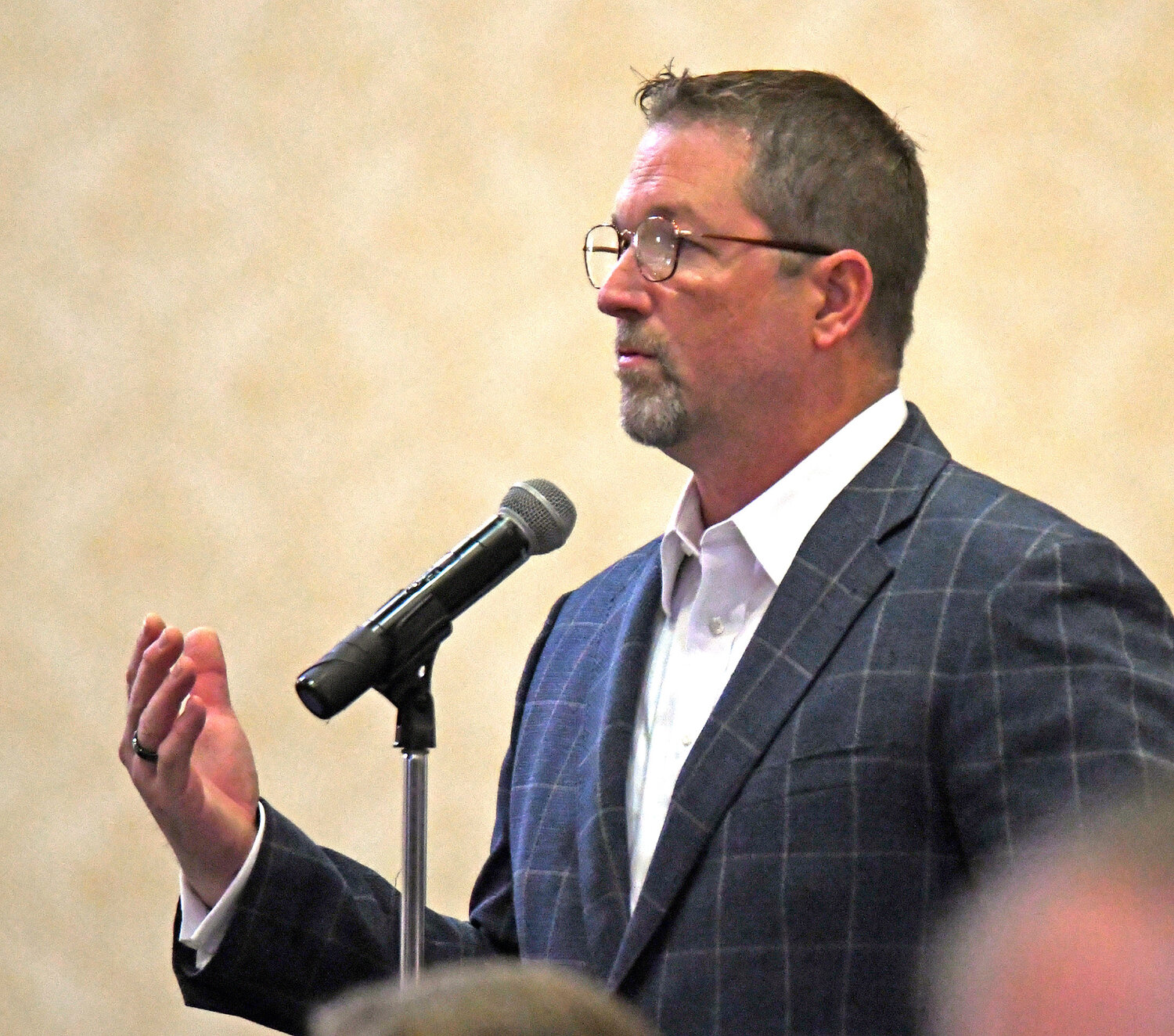
At the lunch, David Boothe of B.I.G. Investment Services posed the original question to the legislators present and followed up with some comments.
“(A sales tax) is naturally progressive,” he said. “You make more; you spend more. Secondly, it catches taxes on an underground economy that pays no taxes whatsoever.”
Email civiltalk@iniusa.org with your thoughts on taxes or where you would cut spending in the state.


